Florida's Nature!
Florida's flora and fauna - Trees, shrubs, vines and wildflowers. Mammals, birds, insects, snakes and other reptiles, amphibians.
Florida is rich with natural diversity
Florida is host to 81 distinct naturally occurring plant and animal communities that are home to over 4,700 species of plants with more than 300 species found only within Florida, there are also many more rare, threatened or endangered species.
Florida has an amazing amount of both salt and fresh water related features with 1,800 miles of ocean coastline (not including the barrier islands), more than 8,460 miles of tidal shoreline that create approximately 2,000 square miles of coastal saltwater marshes and mangroves, over 18,500 square miles of various inland freshwater wetlands, and more first and second magnitude springs (27) than any other state in the U.S..
Florida is also the only state in the continental United States that has an extensive coral reef system. These reefs extend from the Dry Tortugas National Park (west of Key West) northward along the east coast to the St. Lucie Inlet in Martin county. John Pennekamp Coral Reef State Park is a 70 mile strech of reef located off Key Largo that is a popular scuba diving destination.
With 25,000 square miles of forests and climate zones ranging from a tropical climate at the southern end of the state transistioning to a temperate climate at the northern third, Florida is home to more native tree species than any other state in the continental U.S..
A relatively flat, low-lying landscape combined with slight elevation changes result in dramatic changes of habitat and plant communities found in any particular area. Depression marshes and ephemeral ponds are prime examples, these wetland features and the transitional zones (called eco-tones) at their margins host an amazing variety of both plant and animal life. See Habitats for more
Birdwatching
Another reason people "flock" to the Sunshine State is the 500 plus species of birds that make Florida home as year-round residents, over-winter here, or use the state as a migratory "rest stop".
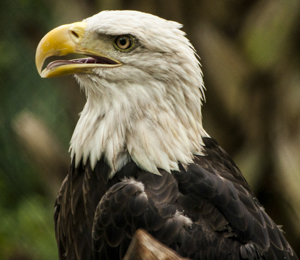
The Great Florida Birding and Wildlife Trail (GFBWT) is a world class, self-guided birding tour that covers 2000+ highway miles with over 515 viewing stops. Find Herons, Egerets, Ospreys and the Bald Eagle as well as many songbirds and perhaps spot an American Flamingo feeding in a South Florida marsh!
The "trail" is divided into east, panhandle, south, and west sections. The website lists stations in each county throughout the state with links to driving directions as well as descriptions, photos and other relevant information.
Florida offers a wide variety of outdoor activities from coast to coast, surfing, scuba diving, golf, sport fishing, birding and boating to hiking, hunting or camping, there are countless opportunities to explore. Of course, there are those miles of unspoiled beaches - the perfect place to just lay back, relax and do nothing!
There are abundant campgrounds, biking, hiking, and horseback riding trails in Florida's award winning state parks, regional and county parks as well as numerous privately owned sites available. It's always a good idea to go online or call ahead to reserve a spot for R/V or tent camping and inquire about available facilities as these can range from primitive camping with no utilities to sites with potable water and electricity as well as nearby food/supply stores.
Definitions - Tree, Shrub, or Herb?
While it's obvious that 60 foot tall plant in your backyard is a tree in many cases this is not as evident, trees may sometimes grow in a shrub-like form with multiple trunks and a shrub may on occassion have a single stem.
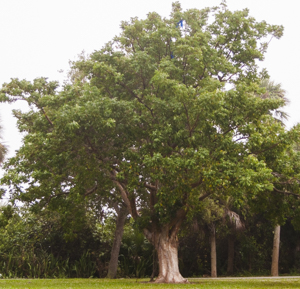
Tree - Single stem or "trunk"
A tree is generally described as "a single stemmed woody plant with a distinct canopy or crown and a height of 15 feet or more at maturity". Trees may occasionally have double or multiple trunks.
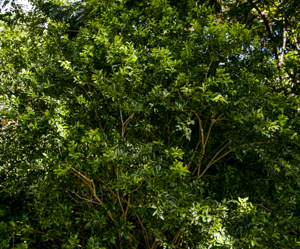
Shrub with multiple stems or trunks
A shrub is also woody stemmed, usually with multiple stems or trunks which rarely or never exceed 13 - 15 feet. In many cases a plant can grow either as a small tree or large shrub. Southern Wax myrtle, a popular landscape plant is an example of a plant that may grow with the form of a shrub OR a small tree.
A sub-shrub also grows with multiple stems, the difference between these and a shrub are that only the base of the stems are woody, the top growth of the plant is herbaceous and often dies back annually.
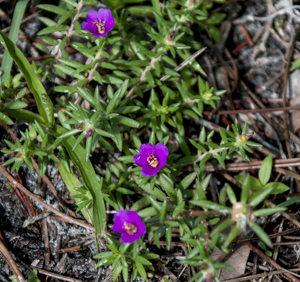
Forb
Forbs (or phorbs), are herbaceous flowering plants that are not grass-like, these smaller plants have no hard, woody stems, they may be annual, bi-annual or perennial. These can have single or multiple stems and are under 5 feet tall.
Many of Florida's wildflowers are forbs and are found in the wildflower section of this website, they are sorted by their colors. The state's offical wildflowers are the twelve native members of the Coreopsis species.
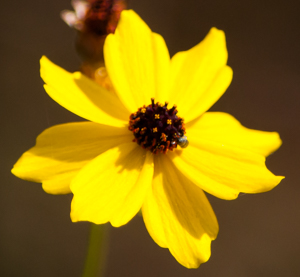
Fringeleaf Tickseed - Coreopsis integrifolia
The Natives versus Exotics
Trees and other plants that existed here prior to the first European contact and occurring apart from human influence are considered natives.
There are more than 67 introduced plants that are considered invasive. These overwhelm and crowd out our native plants, causing extensive damage to all types of habitats. A subtropical to tropical climate with mild winters and hot, humid summers encourage rapid growth in non-native plant species that already have an advantage in the fact that they have no natural controlling factors here such as the insect pests or diseases that are found in their native lands.
Many exotics found in the wild are "naturalized", a naturalized species is defined as "any imported plant that persists in the wild on its own without being cultivated but do not become invasive". Many of these plants were introduced to the state as landscape plants and have escaped from cultivation by way of seeds or spores being spread by way of animals, birds and human activity.
There are also an increasing number of exotic animal species now proliferating in Florida, probabaly the most well known being the Burmese pythons that have decimated the populations of native mammals, birds and reptiles in the Everglades. Unfortunately there is a long, growing list of non-native reptiles, amphibians, invertebrates and insects that are causing environmental and economic harm, this has become a serious economic problem worldwide resulting in billions of dollars of damage to food crops.
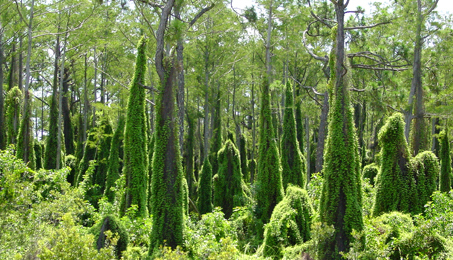
Above - The Old World Climbing Fern (Lygodium microphyllum)is a very fast growing exotic invasive fern that has become a major problem in South Florida woodlands. Spores are easily carried and spread by animals, people or vehicles that travel through infested areas.