Creating a Butterfly Garden in South Florida
A planting guide for USDA zones 10 & 11.
Native host plants, nectar sources, and a layout for a garden that supports butterflies through every life stage.
South Florida is one of the richest butterfly regions in North America. Warmth and humidity let butterflies fly nearly year-round, and the region hosts species you won't find anywhere else in the continental United States — the Atala, the Schaus' Swallowtail, and the Florida Leafwing among them. A garden that genuinely sustains butterflies needs more than pretty nectar flowers, though. Butterflies need host plants — the specific species their caterpillars eat — or the next generation simply can't exist. A real butterfly garden pairs nectar sources for the adults with host plants for the caterpillars.
How Host Plants Work
Most butterflies are picky. Their caterpillars can only digest a narrow range of plants, so each butterfly species needs its particular host plants present in order to lay eggs. Expect host plants to look chewed — that is the point. Plant several of each in groups, so the caterpillars don't strip everything bare and adult butterflies can more easily find them from the air.
Choosing a Site
Sun, Shelter & Water
- Sun: at least 6 hours of direct sun. Butterflies are cold-blooded and need warmth to fly.
- Shelter: place taller shrubs on the windward side. Strong wind grounds butterflies and dries out caterpillars.
- Water: a shallow dish with damp sand or a sunny puddle gives males a place to "puddle" for minerals.
- Sun rocks: a few flat light-colored stones give butterflies somewhere to bask in the early morning.
Soil & Drainage
- Most South Florida soil is sandy and fast-draining — perfect for natives, hard on imports.
- Skip the heavy mulch right around milkweed and host plants; it can rot the crowns.
- Use compost, not synthetic fertilizer. Fast nitrogen produces lush growth that attracts aphids and stresses caterpillars.
- If your yard floods, build a shallow berm for the milkweeds and wild lime; they prefer dry feet.
Native Host Plants by Butterfly
Monarch & Queen
- Swamp milkweed (Asclepias incarnata) — pink flowers, tolerates wet soil
- Butterfly weed (Asclepias tuberosa) — orange flowers, prefers dry sandy soil
- Aquatic milkweed (Asclepias perennis) — white flowers, great for South Florida shade
- Pinewoods milkweed (Asclepias humistrata) — for sandy uplands
Avoid Tropical milkweed (Asclepias curassavica) it is an unwanted invasive species, — it's the common red-and-yellow one sold at most big-box nurseries. In Florida it doesn't die back in winter, which lets the Ophryocystis elektroscirrha (OE) parasite build up on the leaves and disrupts monarch migration. If you already have it, please at least cut it to the ground each fall.
Zebra Longwing (Florida's State Butterfly) & Gulf Fritillary
- Corkystem passionflower (Passiflora suberosa) — the best South Florida choice; small, tolerates shade, and the easiest to find
- Maypop / purple passionflower (Passiflora incarnata) — vigorous vine, large purple flowers
- Yellow passionflower (Passiflora lutea) — for more northern parts of the state
Skip the showy red passionvine (Passiflora coccinea) — caterpillars often fail on it.
Atala — A South Florida Specialty
- Coontie (Zamia integrifolia) — Florida's only native cycad. The Atala butterfly was thought extinct by the 1960s because coontie was over-harvested for its starch. Planting coontie has brought the Atala back across Miami-Dade, Broward, and Palm Beach counties. If you garden in South Florida, this is one of the highest-impact plants you can install.
Giant Swallowtail & Schaus' Swallowtail (Endangered)
- Wild lime (Zanthoxylum fagara) — small thorny tree, the workhorse host for South Florida swallowtails
- Hercules' club / toothache tree (Zanthoxylum clava-herculis)
- Torchwood (Amyris elemifera) — critical for the endangered Schaus' Swallowtail in the Keys and far south
Sulphurs (Cloudless, Orange-barred, Sleepy Orange)
- Bahama cassia (Senna mexicana var. chapmanii) — the South Florida native cassia; covered in yellow flowers most of the year
- Privet senna (Senna ligustrina) — taller, more upright
White Peacock & Phaon Crescent
- Frogfruit (Phyla nodiflora) — a tough native groundcover that doubles as host plant; takes foot traffic and replaces lawn
- Water hyssop (Bacopa monnieri) — for wet edges
Cassius Blue & Ceraunus Blue
- Pineland croton (Croton linearis) — also the host for the endangered Florida Leafwing and Bartram's Hairstreak
- Plumbago (Plumbago zeylanica, the native species) — not the showy cultivar
Nectar Plants for Adult Butterflies
Once your caterpillars become adults, they need fuel. South Florida natives that produce reliable nectar through the warm months:
Sun-loving Natives
- Firebush (Hamelia patens) — the true native, not the dwarf "compacta"
- Tropical sage (Salvia coccinea)
- Beach verbena (Glandularia maritima)
- Blanket flower (Gaillardia pulchella)
- Spotted beebalm (Monarda punctata)
- Dotted horsemint — alternate common name, same plant
- Black-eyed Susan (Rudbeckia hirta)
- Dune sunflower (Helianthus debilis)
Shrubs & Small Trees
- Wild coffee (Psychotria nervosa) — partial shade
- Bahama strongbark (Bourreria succulenta)
- Spanish needles (Bidens alba) — weedy but the single most-visited butterfly plant in South Florida; tolerate it in a corner
- Saltbush / groundsel tree (Baccharis halimifolia)
- Buttonbush (Cephalanthus occidentalis) — for wet spots
- Jamaica caper (Quadrella jamaicensis)
Garden Layout
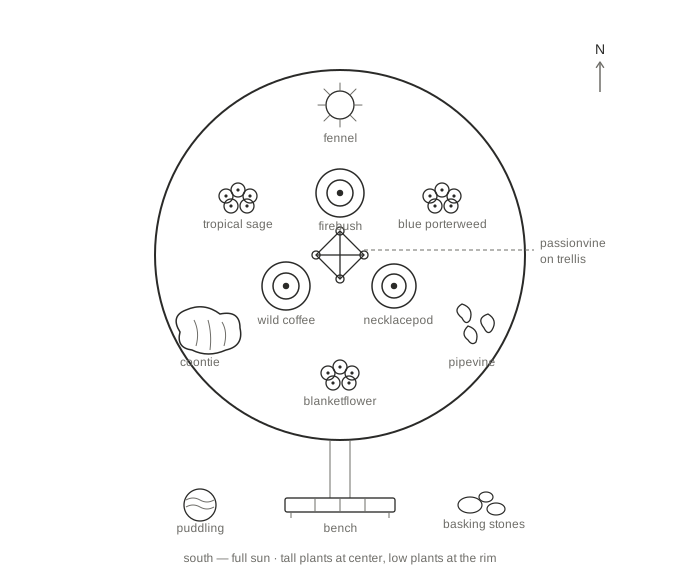
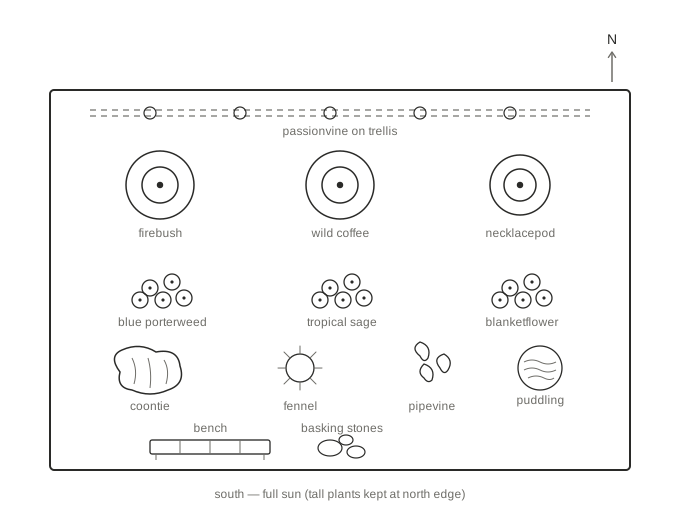
Think in layers. South Florida butterflies use a garden vertically as well as horizontally:
- Canopy: wild tamarind, gumbo limbo, or live oak give roosting and overnight cover
- Mid layer: firebush, wild coffee, Bahama cassia — main nectar level
- Low shrub layer: coontie, corkystem passionvine on a low trellis, milkweeds
- Groundcover: frogfruit and beach verbena fill gaps and host smaller butterflies
Plant in drifts of three to seven of the same species rather than one of everything. Butterflies find color blocks much more easily than scattered single plants, and grouped host plants let caterpillars feed without exhausting any single plant.
Leave a sunny corner unmulched and slightly bare — that's where you'll see "puddling" males gathering minerals.
South Florida Bloom Calendar
South Florida's seasons are inverted from the rest of the country — the cool dry months (December–April) and the warm wet months (May–November) each have their own flowering peak. Aim to have at least three nectar species blooming at any given time.
| Season | Peak Bloomers | Butterflies Most Active |
|---|---|---|
| Dec – Feb (cool/dry) | Bahama cassia, firebush, Spanish needles, blanket flower | Sulphurs, Monarchs (over-wintering), Zebra Longwing |
| Mar – May (warm/dry) | Tropical sage, beach verbena, dune sunflower, wild coffee | Atala, Giant Swallowtail, Cassius Blue, Gulf Fritillary |
| Jun – Aug (warm/wet) | Buttonbush, frogfruit, milkweed, spotted beebalm | White Peacock, Phaon Crescent, Queen, Zebra Longwing |
| Sep – Nov (warm/wet to dry) | Saltbush, dotted horsemint, blue mistflower, goldenrod | Monarchs (migrating through), Gulf Fritillary, Sulphurs |
What to Avoid
- Pesticides of any kind — including "organic" Bt and spinosad. They kill caterpillars indiscriminately. Even systemic neonicotinoids in nursery-stock plants will kill caterpillars for months after planting.
- Mosquito spray trucks — call your county and ask to be on the "no-spray" list if you keep a butterfly garden.
- Tropical milkweed (Asclepias curassavica) — covered above. Use native milkweeds.
- Sterile cultivars — "double" flowers and many hybrid annuals produce no nectar.
- Invasive look-alikes — Mexican petunia, lantana camara (the common one), and porterweed cultivars can escape and outcompete natives.
Where to Source Plants
Look for nurseries certified by the Florida Association of Native Nurseries (FANN) — they sell true natives and don't treat with neonicotinoids. The Florida Native Plant Society has local chapters that hold plant sales each spring and fall, often with species you won't find anywhere else. In South Florida, your county extension office and the Institute for Regional Conservation are also excellent leads.