Florida Trees and Shrubs
Gopher Apple - Licania michauxii
Family - Chrysobalanaceae
Native
.jpg)
Habitat - Scrub, sandhill, pine flatwoods
Description - Native perennial, shrub, sub-shrub 3 to 12 inches in height. Stout, underground stems (rhizomes) from which it produces slender aerial shoots. The oblong stiff leaves are 1-4 inches long, 1 to 1 1/2 inches wide, lime green in color and have an oblong spatulate shape. The underside of these leaves are glabrous or finely pubescent, margins are shallowly undulate and entire.
Flower - Inconspicuous, green flowers in summer and are followed by purplish-brown ellipsoid drupes that are 1/2 to 1 inches long. Important food source for the Gopher Tortoise and many other animals.
Sea Lavender, Sea Rosemary - Argusia gnaphalodes
Family - Boraginaceae
Native
%202.jpg)
.jpg)
%20flower.jpg)
Habitat - Coastal Strand, Dunes
Description - Endangered Florida native perennial shrub to 6 feet tall with an equal or greater spread. Leaves are succulent, linear to slightly spatulate & greenish-gray in color.
Flowering year-round, flowers emerge white with green throat, changing to a pinkish lavender.
Coinvine - Dalbergia ecastaphyllum
Family - Fabaceae
Native
Taub%202.jpg)
Taub.Detail%20.jpg)
Habitat - Coastal strand, coastal hammocks, margins of mangrove swamps, river and stream banks.
Description - Native perennial sprawling shrub or trailing vine. Leaves alternate, leathery, sparsely pubescent on top and bottom.
Flower - Small 1/4 inch white flowers in clusters at leaf axils. Fruit is a copper-colored round pod.
Scorpions-tail - Heliotropium angiospermum
Family - Boraginaceae
Native
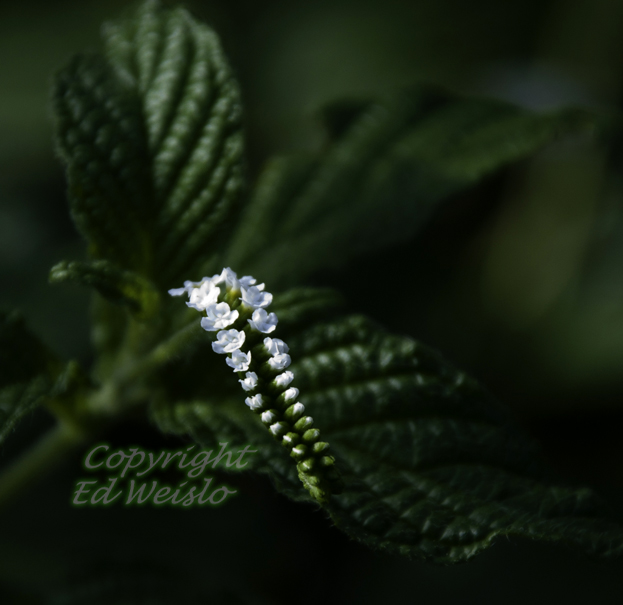
Scorpions-tail is a 1-3 foot tall native herbaceous plant with a woody base and a somewhat sprawling habit of growth.
Range is from the upper Keys north to around Jacksonville on the east coast and Tampa on the west.
Scorpions-tail is found mainly as an understory plant in Hammocks near the coast. This plant is used by many butterflies as a nectar plant.
Rough Velvetseed - Guettarda scabra
Family - Rubiaceae
Native
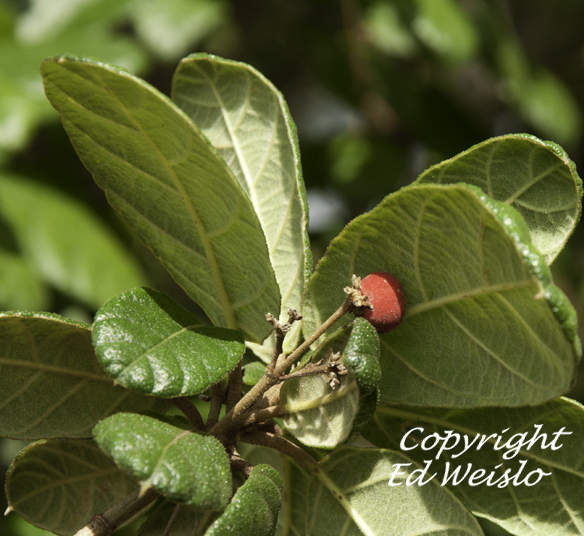
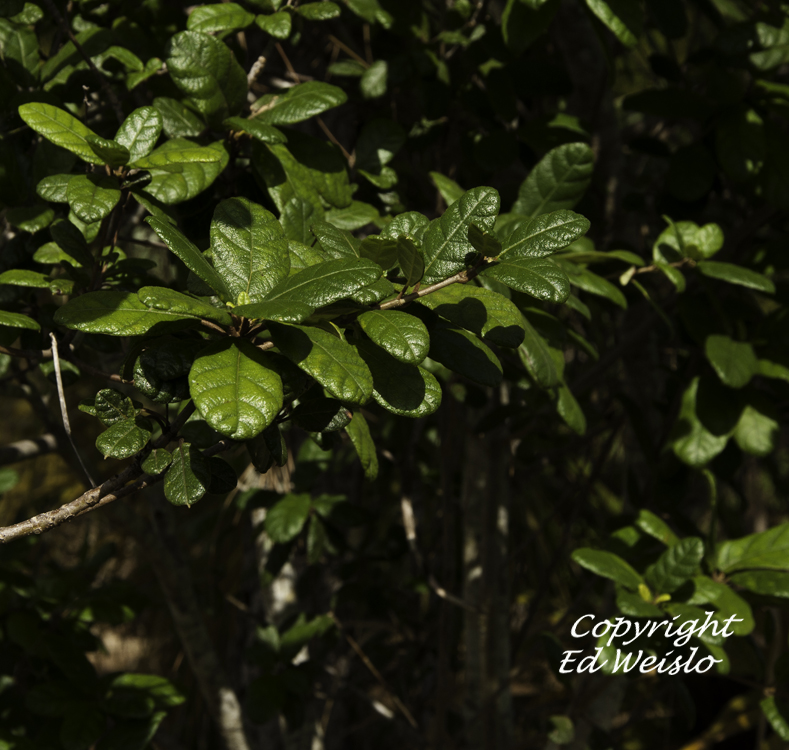
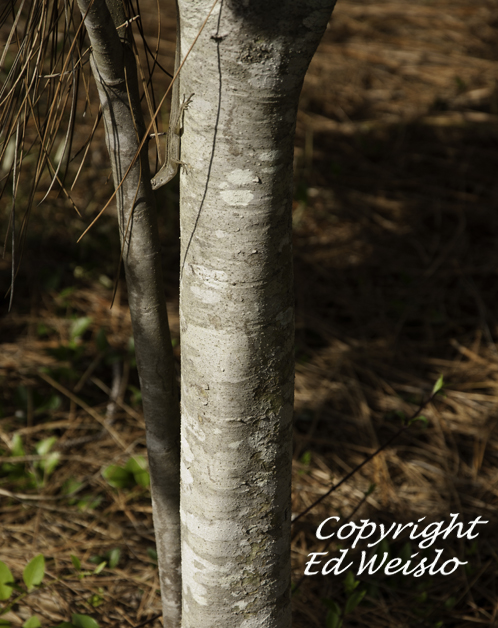
Rough Velvetseed grows as a small tree or large shrub to about 15 feet in height, and is native to S. Florida. Leaves are oval, 2-4 inches long and covered with short stiff hairs, and are rough to the touch. Tubular white flowers are produced year-round, followed by roundish red berries covered with a velvety pubescence.
Rough Velvetseed can be found in moist to fairly dry soils in pinelands and hammocks of the Keys, Monroe, Dade, Palm Beach and Martin counties as an understory shrub or small tree.
Pyramid Bush - Melochia tomentosa
Family - Sterculiaceae
Native
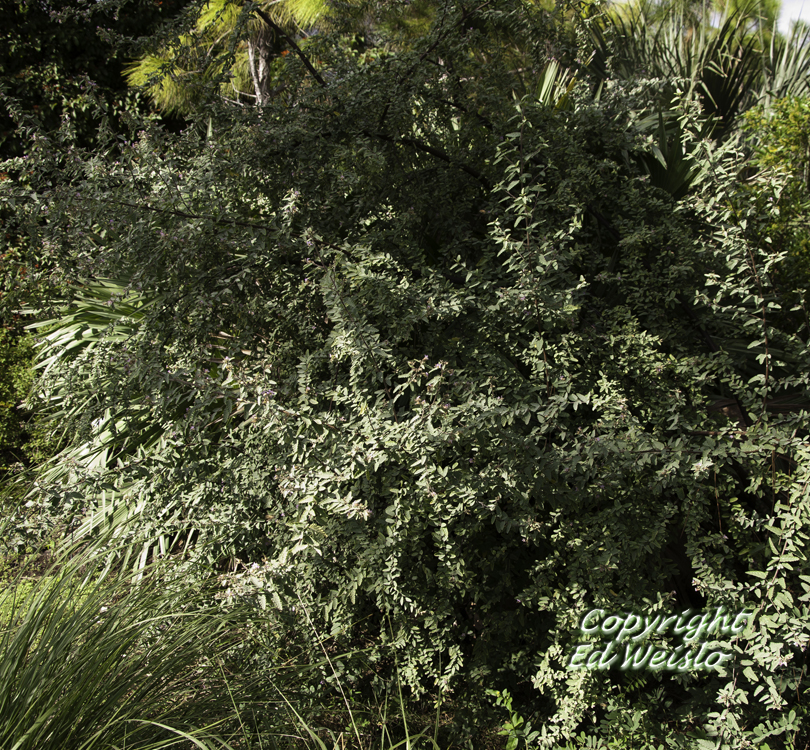
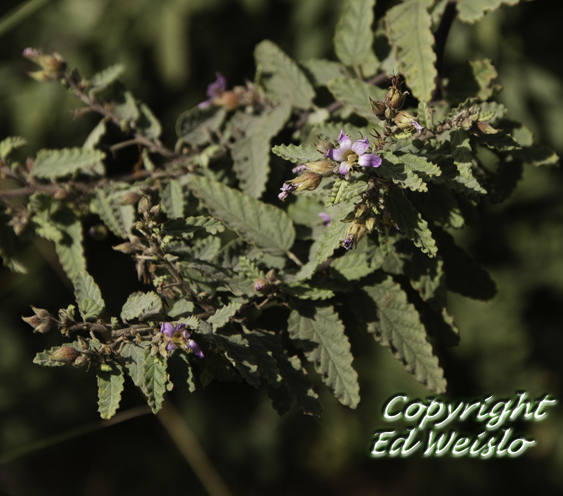
Related to chocolate plants, the Pyramid Bush is a small native shrub of dry Pinelands in South Florida. Also known as Tea Bush, Wooly Pyramid, and Broom Weed, this plant is gaining popularity as a Florida landscape shrub because it grows well in dry, harsh conditions and produces flowers from spring through winter. Attractive to butterflies and hummingbirds, the flowers range from pinkish to almost purple, the lanceolate leaves have serrated margins, are covered in short soft hairs and have a silver-gray hue.
Seacoast Marshelder - Iva imbricata
Family - Asteraceae
Native
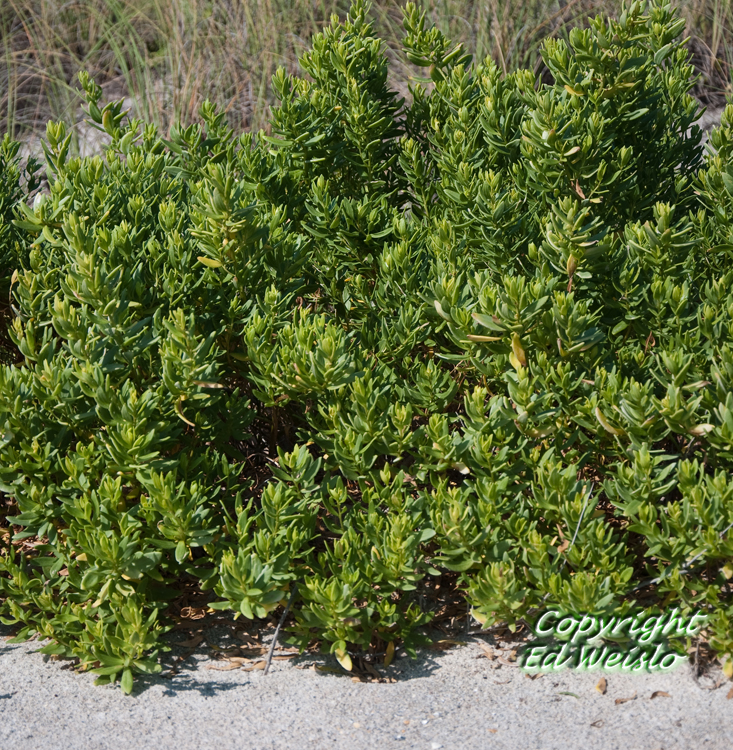
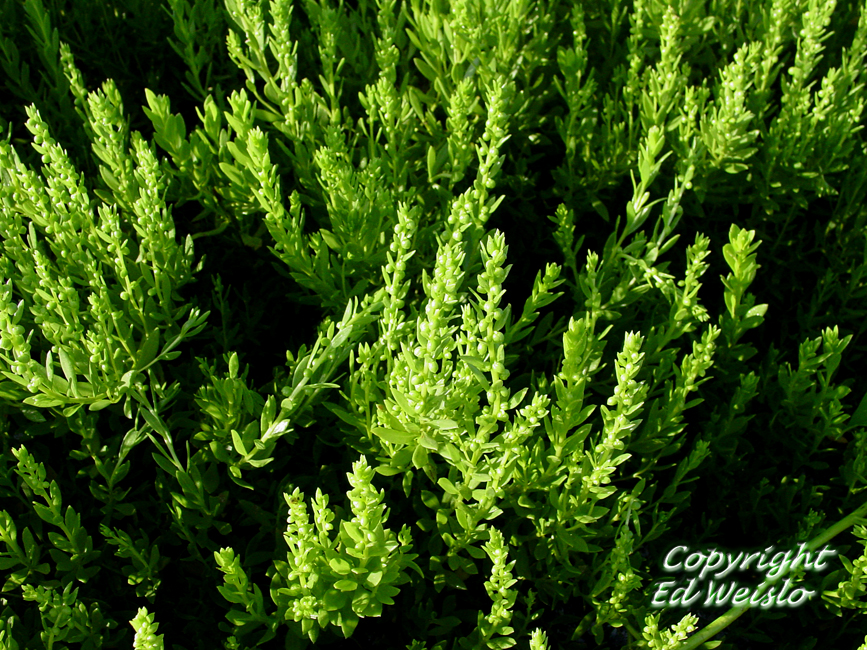
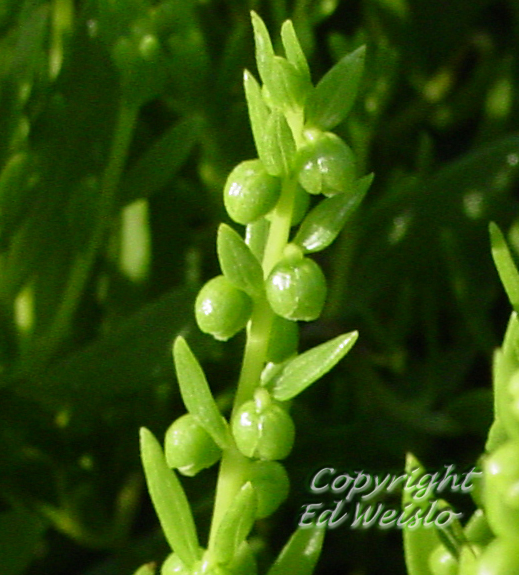
Small native perennial shrub, sub-shrub found in coastal strand and beach dune habitat. The Seacoast Marshelder is an important pioneer plant that grows in direct contact with salt spray and helps to bind dunes and prevent erosion. 2-3 feet tall with a spreading habit of growth, the stems root when they contact the sand.
Leaves are succulent, smooth, light green with entire margins, up to 2 inches long. Plant stems are reddish when young and turn tan as they age. Flowers are small and green. Seacoast Marshelder is found in most (possibly all) coastal counties throughout Florida.
Water Toothleaf, Corkwood - Stillingia aquatica
Family - Euphorbiaceae
Native
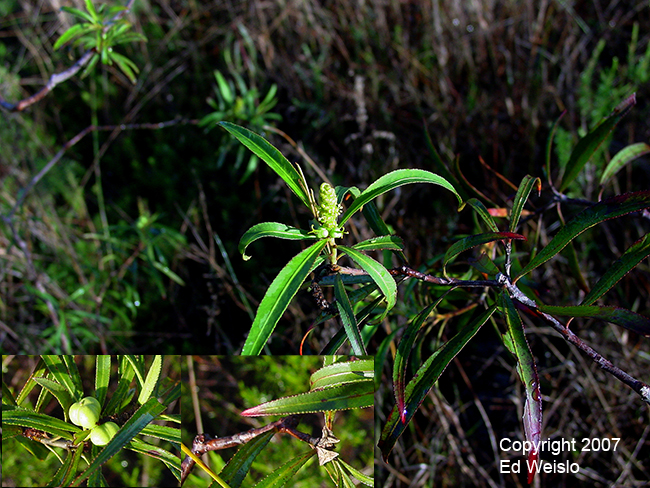
Habitat - Marshes, swamps and wet prairie
Description - Native perennial, subshrub/shrub. 2-4 feet in height, tends to be spindly with sparse foliage concentrated at tips of branches.
African Rosemallow, Cranberry Hibiscus - Hibiscus acetosella
Family - Malvaceae
Invasive / Exotic
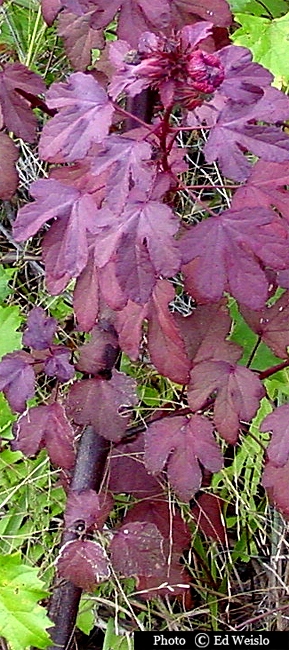
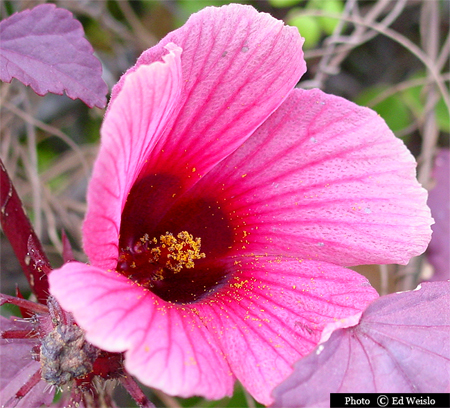
Habitat - Ruderal, Wet Flatwoods
Description - Native to Africa. Introduced annual or perennial shrub 2-5 feet tall, deep red-crimson leaves are alternate, 3 lobed, deeply cut with serrate margins on long petioles. Flowers are pink to deep red, 3-5 inches across.
Turkscap Mallow - Malvaviscus penduliflorus
Family - Malvaceae
Invasive / Exotic
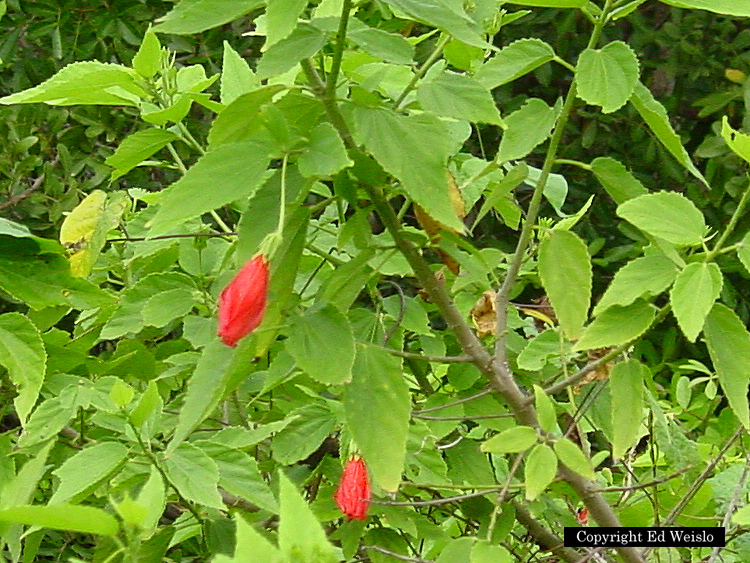
%20flower%20.jpg)
Habitat - Ruderal, Old home sites, roadsides
Description - Not native, introduced from South America. Shrub to 10 feet tall, variable leaf forms alternately arranged. Leaves may be oval, cordate or lobed, hirsute or glabrous. Margins dentate or smooth, yellowish-green to deep green in color. Habit of growth can become vine-like, especially when growing in shade.
Flower - Pendent or semi-erect red tubular flower that never opens fully, protruding stamen.
Caesarweed - Urena lobata
Family - Malvaceae
Invasive / Exotic
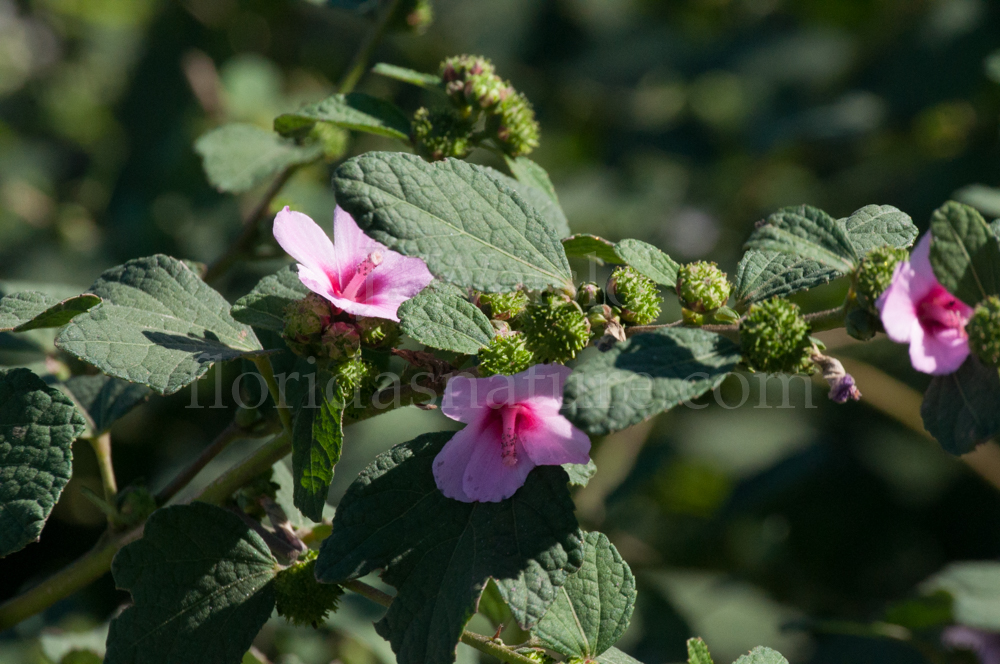
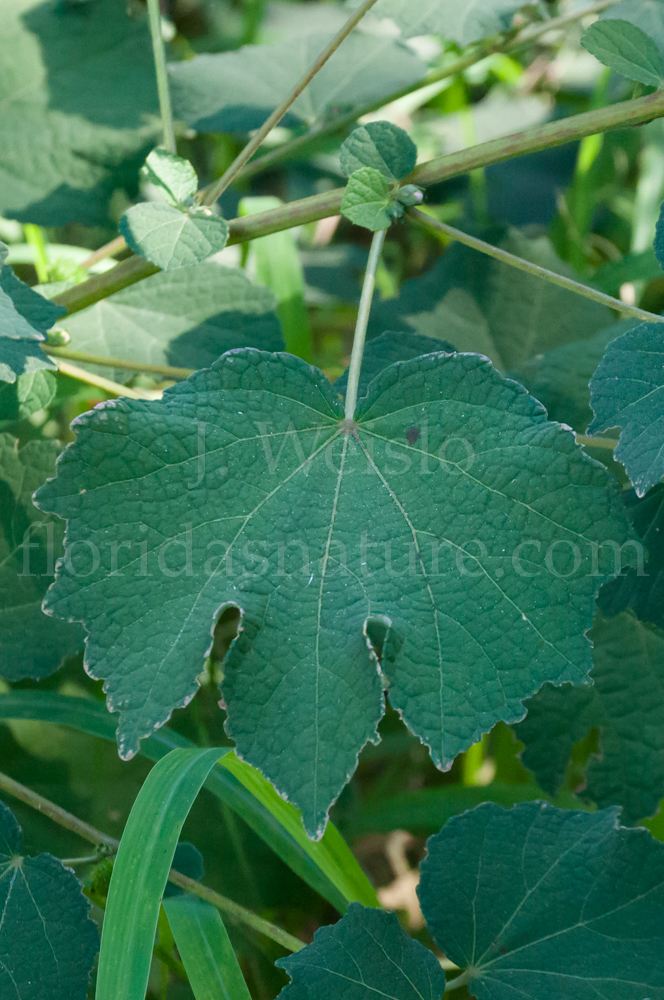
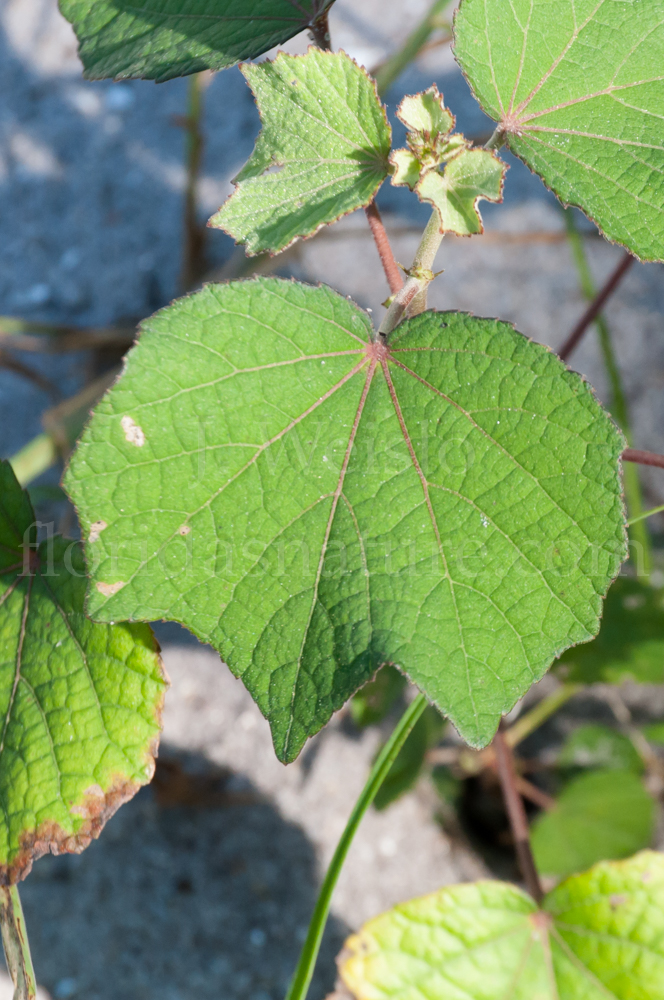
Not native. Annual or perennial erect shrub to 10 feet tall, usually 5 feet or less. Leaves are simple, alternate and broadly ovate with 3-5 lobes. Leaves and stems hairy, underside of leaves grayish colored.
Flowers year-round in S. Florida producing hibiscus-like 1 cm rose to pink colored flowers. This plant produces many burrs that "hitch-hike" a ride on any animal or person's clothing that is passing through, thus dispersing seeds along the host's path. Grows in all types of habitats, particularly disturbed areas; this invasive exotic plant forms scattered dense thickets in the wild, crowding out native plants.
Woman's Tongue - Albizia lebbeck
Family - Fabaceae
Invasive / Exotic
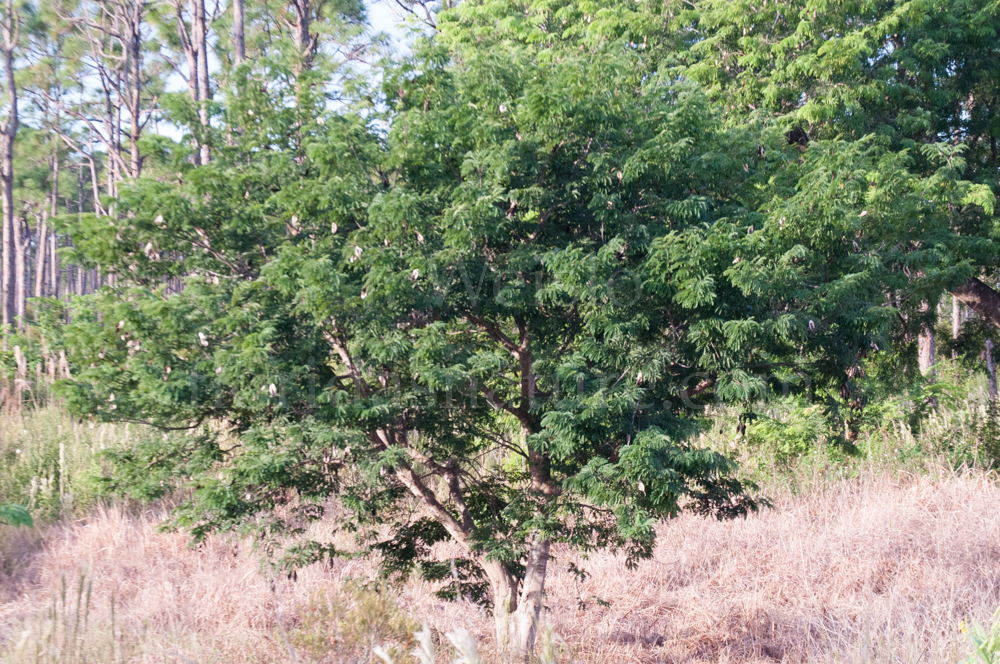
A.K.A. - sirisa, siris, lebbek tree, flea tree, frywood, koko
Not native, can be invasive in south and central Florida. Deciduous tree to 65 feet with a spreading, rounded crown and light tan almost white bark; occasionally shrub-like with multiple stems, it also produces suckers from the roots. Leaves are alternate, twice compound with 2-5 pairs of pinnae each having 3-10 pairs of leaflets. Leaflets are elliptic-oblong, green above, lighter green below.
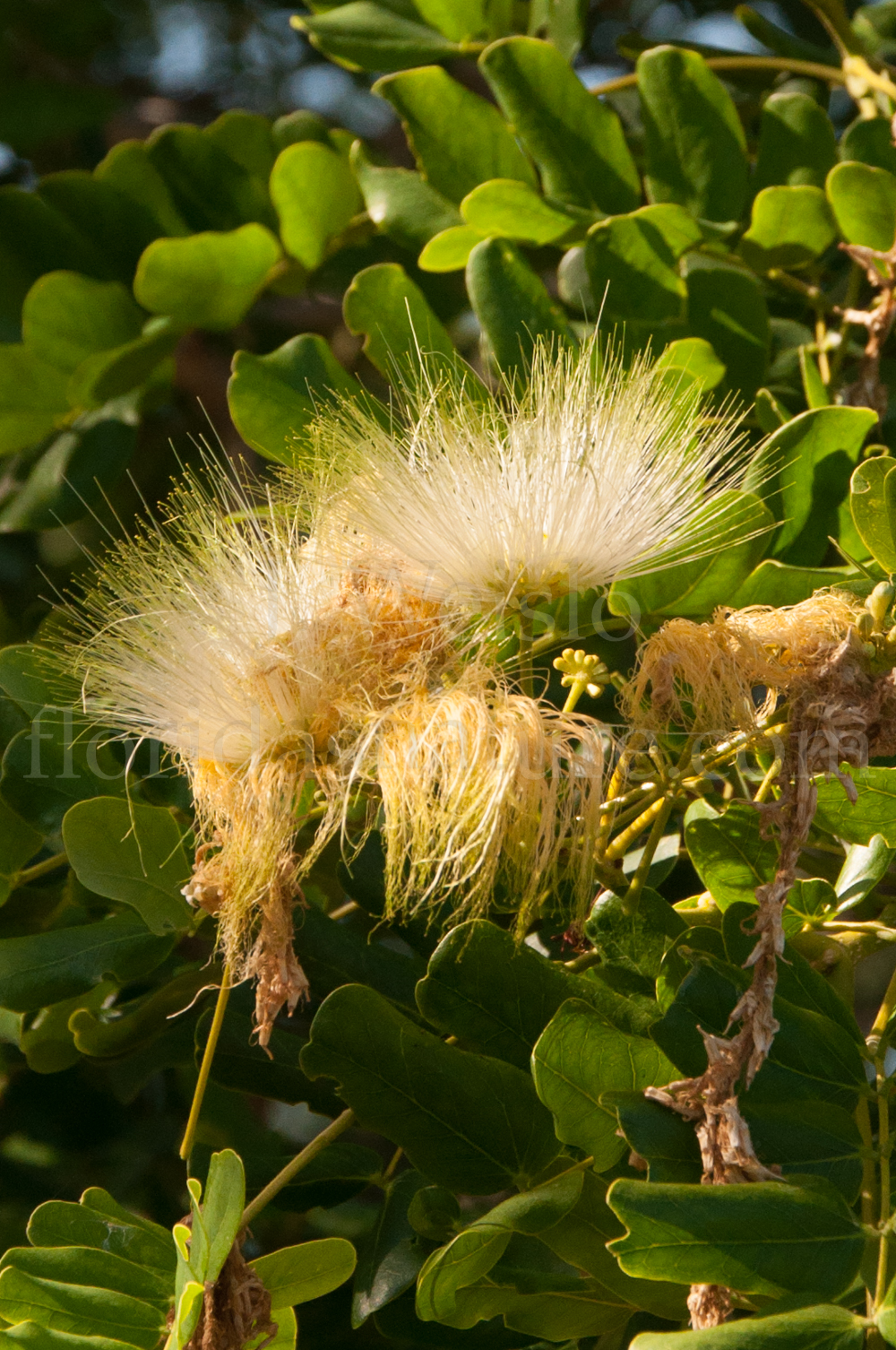
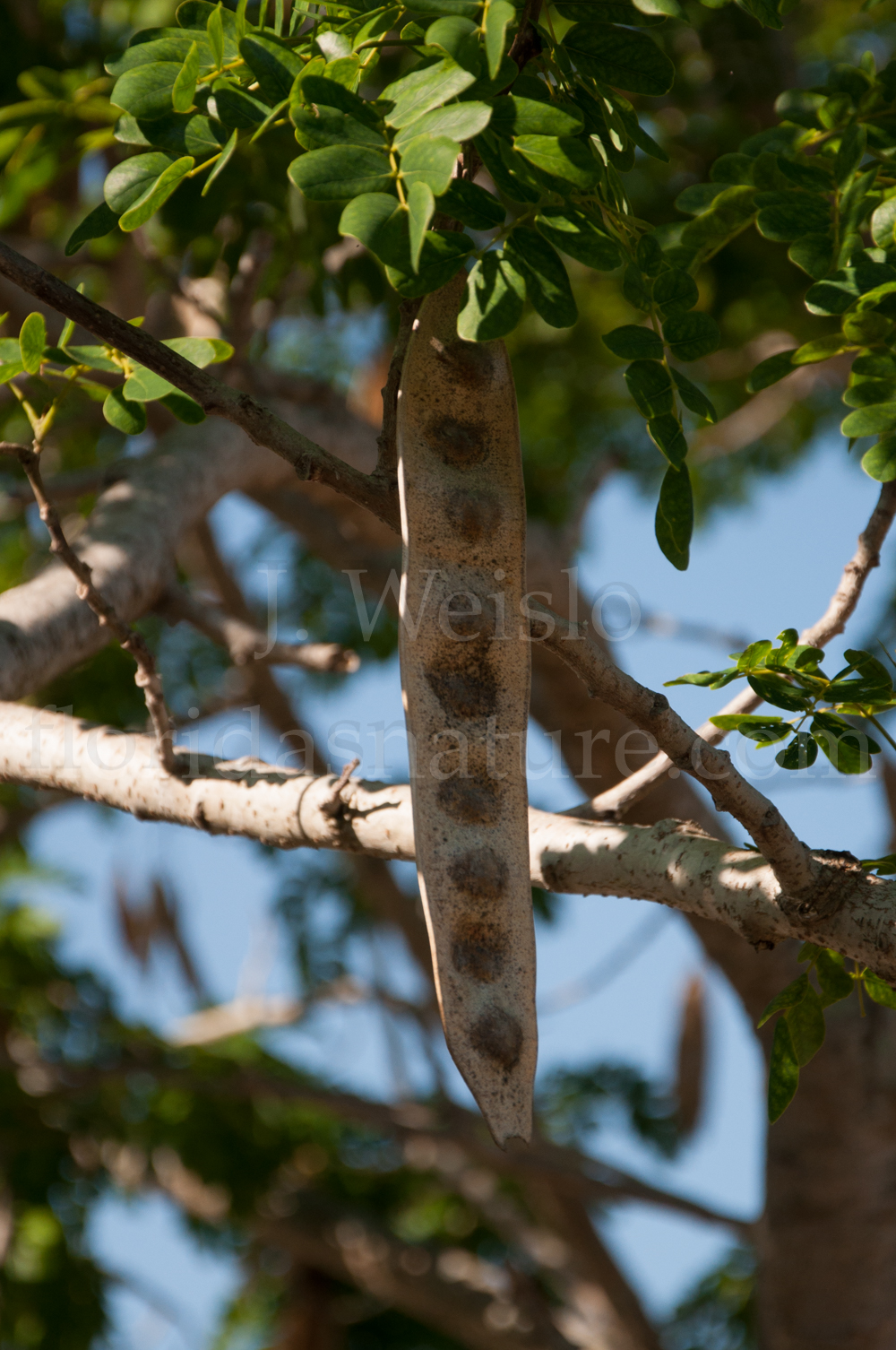
Flowers are like a powder puff with numerous long stamens, and creamy-white in color, followed by flattened seed pods up to a foot long. These often persist after leaf fall, turning from green to brown before splitting open to release their many flat, dark brown seeds.